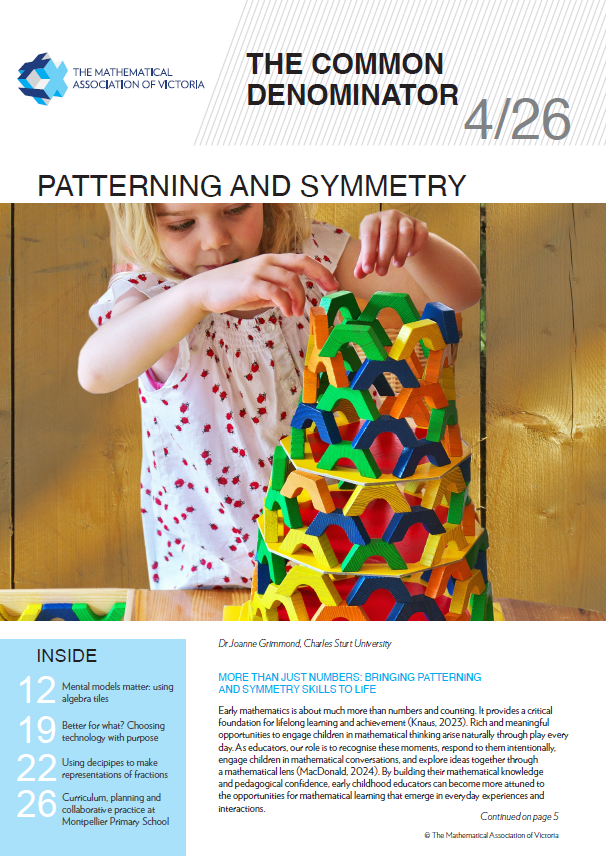
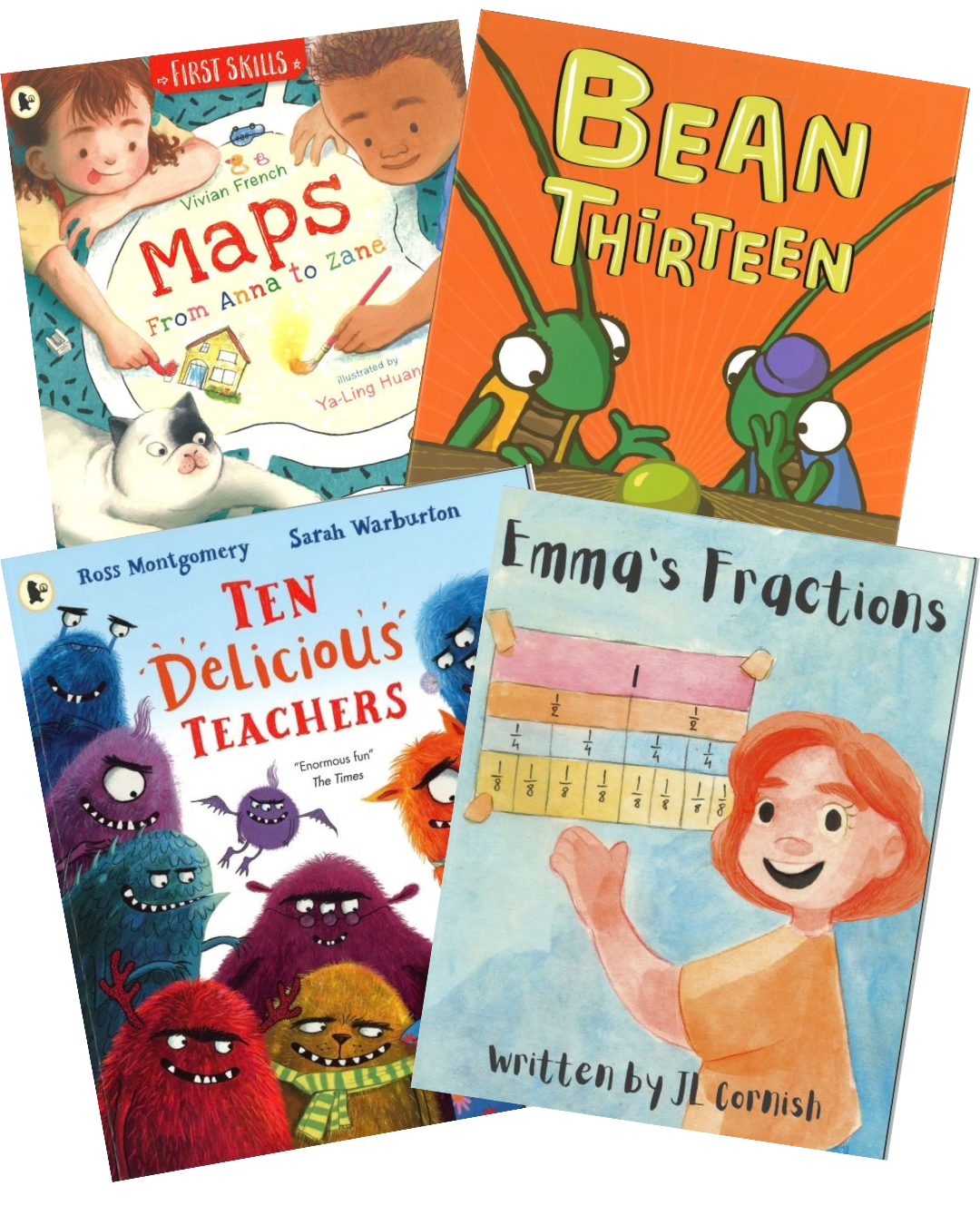
Picture books in mathematics explore big ideas through imaginative storytelling. Teachers can build rich learning experiences around the books we've selected, and revisit them throughout a unit to help bed down the big ideas.
Why use picture books?
Picture books can motivate students by:
- Stimulating curiosity and interest in mathematical concepts
- Providing a platform for mathematical discussion, where students can share prior knowledge, make conjectures and test ideas
- Giving a 'so what?' reason for the learning, often by exploring a real-life mathematical conundrum
Many books in this curated collection come with reviews and lesson plans written by Victorian teachers, and our curriculum guide links each book to the Australian primary mathematics curriculum. Every book is available in the MAV Shop, and MAV members save 20%.
Browse by year level
Book reviews
These reviews have been contributed by MAV members. Have a favourite picture book you'd like to tell us about? Email us the title, author, illustrator, your school and the year level you teach.
-
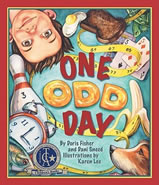
One Odd Dayby Doris Fisher and Dani Sneed, illustrated by Karen Lee
Contributed by Andrew Noordhoff, Grade 3 teacher, Jells Park Primary School
One Odd Day tells the story of a young boy who wakes up to discover everything in his world is 'odd'. Everywhere he looks he finds odd things: his shirt has three sleeves, his dog has five legs and his teacher has five arms.
The book was extremely engaging. Read aloud, its rhythmic words worked really well, and students were tuned in straight away by the title and front cover. As we read, they understood the concept of odd by identifying the odd numbers on the clock, and delighted in finding the hidden numbers and odd creatures in the illustrations.
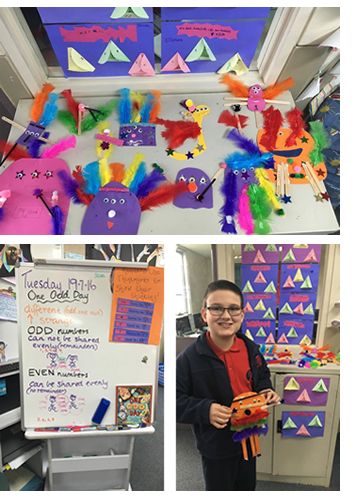
As a follow-up, students used play dough to create their own 'odd creature' with odd features. They made a wonderful range of creatures and loved sharing them with the class while others found all the 'odd' features.
The book was very useful in helping students grasp odd and even, and look for things in everyday life that are odd or even. A further follow-up could be to write a class book about 'The Even Day', linking literacy and numeracy.
What students said
- "I loved learning about odd numbers using the book." (George)
- "It was fun finding numbers in the book." (Keira)
- "Loved how the mum had two heads." (Xander)
- "Loved finding odd creatures in the book." (Shiloh)
- "You could make something silly." (Sam)
- "You could make whatever you liked." (Jenny)
- "I loved making my creature look odd with an odd number of parts." (Thomas)
Activity comments contributed by Nadia Costabile, Year 1 teacher, Jells Park Primary School
A second lesson: Year 3 focus group
Contributed by Andrew Noordhoff, Grade 3 teacher, Jells Park Primary School
We centred a lesson around this book for a Year 3 maths group needing extra support.
- An initial conversation about odd and even numbers
- Other meanings of 'odd', such as strange, or the 'odds' in chance and probability
- Reading the book, and discussing all the odd things (strange things and uneven numbers, and the odds of them actually happening)
- A follow-up activity: make a very odd creature
The students had a fantastic time creating their monsters. Putting the pencils away and letting them get creative was a much-needed motivation for students who often lack confidence and enthusiasm. As they worked, they kept checking the criteria, making sure they used odd numbers and made their monster look odd or strange.
The activity would be fantastic for the junior years, and was a welcome change for this group, who now feel confident with odd and even numbers. The teacher's notes at the back of the book were also really helpful.
-
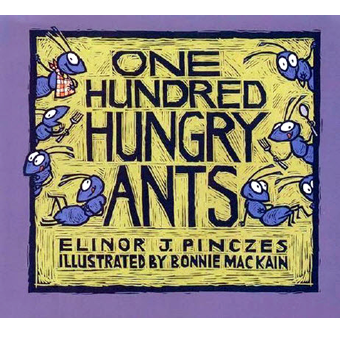
One Hundred Hungry Antsby Elinor Pinczes, illustrated by Bonnie MacKain
Contributed by Ellen Corovic, Mathematics Education Consultant, MAV
I was quickly captivated by the rhyme and imagery in Elinor J. Pinczes' One Hundred Hungry Ants.
It's a simple idea: 100 ants march to a picnic to get 'yummies for our grumbling tummies'. Along the way, the book shows different ways to make 100 as a rectangular array. The ants start marching in one row, until the littlest ant exclaims they're marching 'way too slow' and suggests two rows of 50. The ants scurry into new formations (but are they just wasting time?) until they're marching in 10 rows of 10.
The story is catchy and repetitive, which helps children tune into the mathematical idea quickly, and the vivid, whimsical illustrations are a good visual representation of the mathematics. It's a great introduction to arrays, ways to make 100, or division, and suits Foundation to Year 4 depending on your focus. Students will especially enjoy the ending!
Using the book in your classroom
Foundation: Use a variety of materials to make 100, and explore ways to organise them to make counting easier. Create a class chart using the sentence starter 'Clever counters...'
Levels 1 and 2: Use materials to model different groupings of 100 and record 'groups of' statements, e.g. 10 groups of 10 is 100. Alternatively, arrange 12 and 24 into arrays and record them as 'groups of' or 'shared between' statements, e.g. 24 shared between 4 groups is 6.
Levels 3 and 4: Go on an array hunt around the classroom or school. Photograph each array and record a matching multiplication or division number sentence. Investigate factor-factor-product relationships by listing all the factors of a range of numbers, using hands-on resources to support the investigation.
-
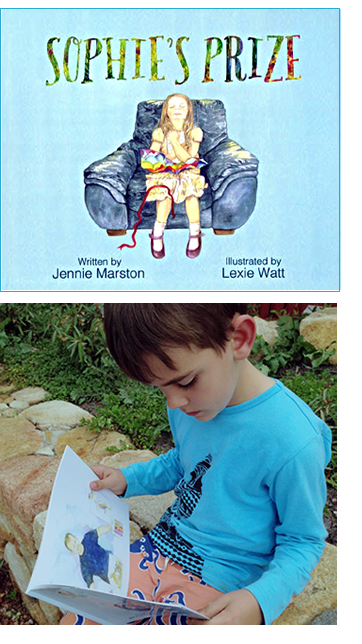
Sophie's Prizeby Jennie Marston, illustrated by Lexie Watt
Contributed by Dr Sharyn Livy, Faculty of Education, Monash University
Children's literature can provide a rich environment for exploring mathematical ideas by:
- Making connections to students' lives
- Promoting problem solving and mathematical reasoning
- Integrating mathematical content
Sophie's Prize can be read simply for its story and illustrations, or used to encourage mathematical thinking in a realistic situation. It's best suited to the early primary years.
Sophie thinks she's the richest girl in Australia when she wins $100 in an art competition, and the story opens up a discussion about how she should spend it. Managing money is part of everyday life, and introducing financial literacy early helps students think about their needs and wants in the future.
What students said
Zeke: "It's good because it tells people how to use their money. I give it seven out of ten."
His brother Finn: "Good book because it teaches you about money and knowing how much it is worth, plus thinking about what to do with it. I think it would be a good book for Preps to Year 1."
After reading
- Discuss what students could buy with $10, $20, $50 or $100
- Bring catalogues into the classroom and have students make a poster showing how they'd spend the money
- Older students could plan a meal or party budget using catalogues
- Plan the cost of a family day out, e.g. to an art gallery
- Draw a map of the family outing
- Create a timetable for the day
-
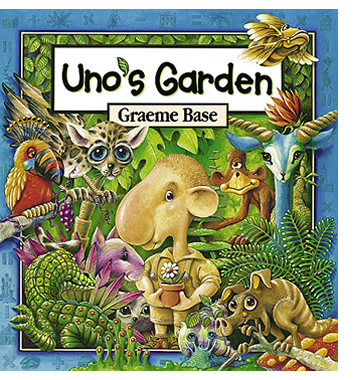
Uno's Gardenby Graeme Base
Contributed by Josh Shuttleworth, Year 1/2 teacher, Derrimut Primary School
From the author of childhood favourites Animalia, The Eleventh Hour and The Worst Band in the Universe comes Graeme Base's thought-provoking Uno's Garden. Set in a beautiful forest full of colourful flora and fauna, it explores sustainability and environmental responsibility.
Uno moves into the forest, and others soon follow. As more people arrive, plants and animals are replaced by buildings and roads, until the city is nothing but concrete and steel. Uno tries to repair the damage by tending his own garden, but he grows old and dies, as does the recurring Snortlepig. Luckily, others in the community take on the garden, and the plants and animals slowly return (except the Snortlepig). The story ends with the hope that one day it might come back.
The book offers teaching opportunities across the curriculum: narrative structure, patterns, alliteration and invented words for literacy, sustainability for science, and number patterns and facts for maths.
Each page features a tally of animals, plants, buildings and Snortlepigs. They change over time in different ways (some double, some follow square numbers, some go up or down by one), so the book can be explored across different year levels. The Snortlepig is also hidden on each page, which lends itself to location language: is he under the tree? To the left or right of the house?
With its detailed illustrations and relatable story, this is a book students and teachers alike will love, and an engaging link to maths in your classroom.
-
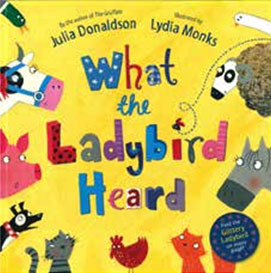
What the Ladybird Heardby Julia Donaldson
Contributed by Alicia Clarke, Foundation teacher, St Mary's Primary School, Whittlesea
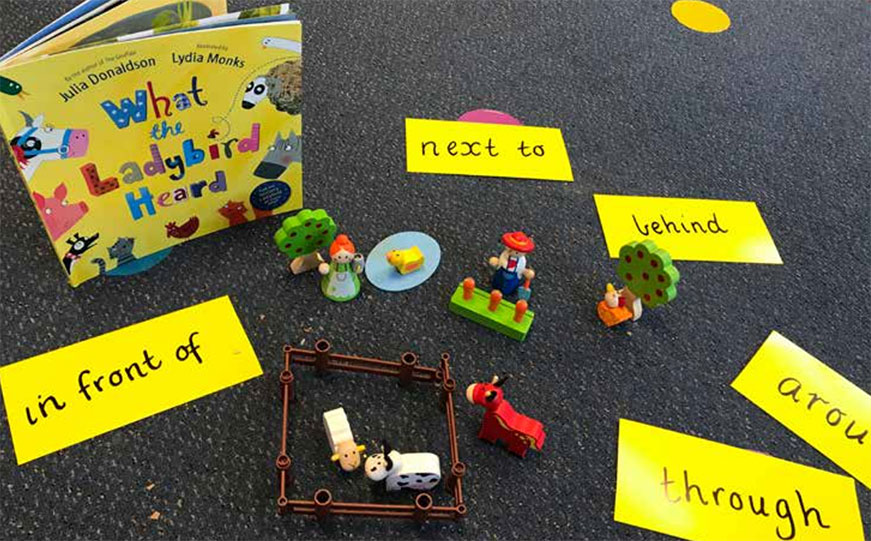
What the Ladybird Heard is a beautifully illustrated picture book with a strong focus on location language. Two thieves plan to steal the prize cow from a farm, but a little ladybird overhears their plans and enlists the other animals to stop them in their tracks. The story is full of rhyme, with the extra challenge of finding the sparkly ladybird hidden on every page.
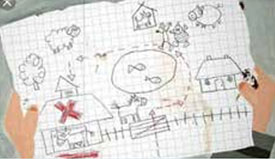
The mathematics becomes clear as the thieves describe how they'll steal the cow, using words such as turn right, round, past, left, straight ahead and through. There's also a map, drawn by the thieves, which opens up lovely discussions about direction and the location of objects on the farm.
Location sits within Measurement and Geometry in the Australian Curriculum. At Foundation, students are expected to 'describe position and movement', and at Level 1 to 'give and follow directions to familiar locations'. This book provides the perfect context for exploring both.
A Foundation lesson
This was the second session of a unit on location. Students had already positioned themselves around the playground and discussed where they were.
We first read the book, enjoying the story and predicting what might happen. We then went back to the part where the thieves describe their route around the farm, and made a list of 'words that tell us where'. Students added to the list from their previous lesson.
As a class, we built our own farm with animals like those in the story, used the thieves' map to place them, and took turns following the thieves' directions to move a character around. We then added extra directions and wrote the location words on cards. Prompting questions included:
- Where is the cow? Where is the sheep?
- How would the thieves get from the sheep to the cow?
- Can you place the duck beside the cow?
- Can you move the sheep around the pond?
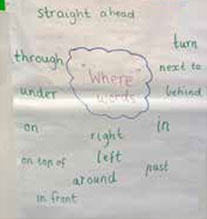
Students then drew their own map of the farm and used our 'where words' to describe the position of one item, which the teacher scribed on their work.
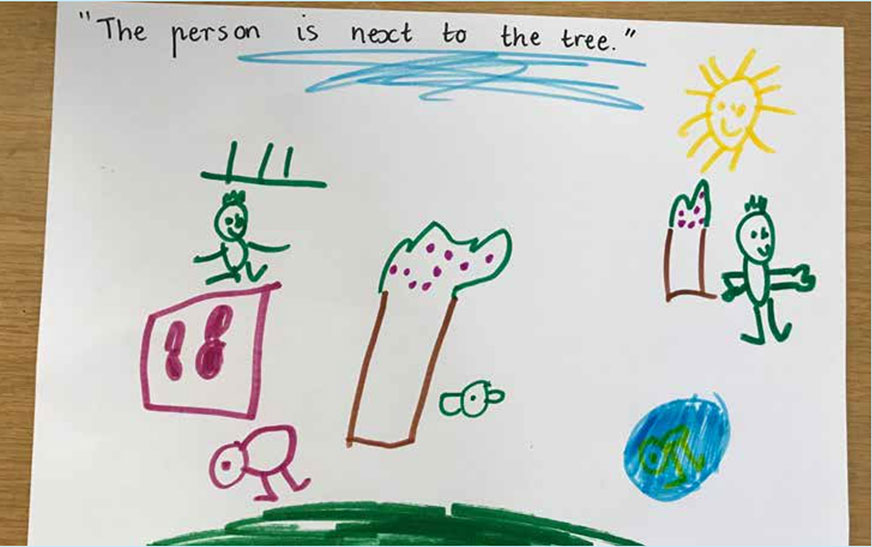
The lesson worked because the book gave students a clear, interesting context for their learning. It was hands-on, so moving the animals around helped students understand each word more deeply, and the final activity showed me whether they could use location language to describe position.
This lesson is just one of many ways to use the book. The sequel, What the Ladybird Heard Next, would be a fantastic way to extend the learning.
-
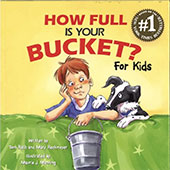
How Full Is Your Bucket?by Tom Rath and Mary Reckmeyer
Contributed by Mel Lowndes, three-year-old kinder educator, Windsor Children's Community Centre
Some picture books are written to teach mathematics explicitly; others have mathematical ideas woven through them. How Full Is Your Bucket? can be used throughout a child's education to discuss relationships and a growth mindset, and it's also a great way to scaffold understanding of measurement.
I used the book with my three-year-old kinder group to explicitly teach social skills while embedding measurement concepts. It sparked collaborative, engaging discussions for children and educators alike, and proved an effective way to explore kindness, gratitude and positive social interactions.
The children absorbed the ideas and questioned their own understanding, asking things like 'What colour is your invisible bucket?' and 'How can I fill your bucket, Mel?' The illustrations helped too: the children could see the bucket levels rising and falling, an explicit link to measurement that also reflects changing emotions.
As a small community, we learnt that we all have a bucket, and that our emotions are what make us human. When a child tells you, unprompted, how they've filled a friend's bucket, you know the book has made a difference.
-
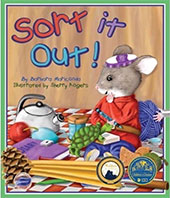
Sort It Out!by Barbara Mariconda, illustrated by Sherry Rogers
Contributed by Alicia Clarke, Foundation teacher, St Mary's Primary School, Whittlesea
Mathematical skills and concepts can be hard for young children to relate to, so placing them in a context they understand is vital in the early years. Picture books are a highly effective way to do this.
Sort It Out! is about Packy, an inquisitive rat who loves collecting all kinds of objects. When his mother tells him to 'sort it all out', he groups his collection by colour, size, texture and purpose. Although it was written with a clear mathematical purpose, children will love the rhyming text, the detailed illustrations and the mystery of where Packy's collections keep disappearing to!
A Foundation session on sorting
At Foundation, students are expected to 'sort and classify familiar objects and explain the basis for these classifications' (Victorian Curriculum). This session, run over two lessons, was one of the first in a unit on sorting, classifying and pattern.
We read the story, studied the illustrations and looked at what Packy sorted into each group. For each group, we found things in our classroom that would fit. When Packy sorted green things, we found a green crayon, texta, counter and unifix cube. Students were very engaged: they could relate to the character and took an active part by 'helping' Packy sort.
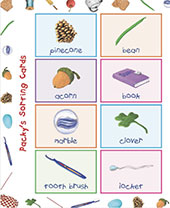
Next, we used Packy's Sorting Cards (a useful photocopiable resource at the back of the book) to practise sorting as a whole class, by criteria such as long and short, or things you can and can't eat. I encouraged students to explain why they grouped objects together, and why some objects didn't belong.
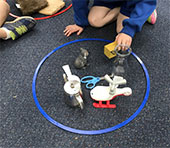
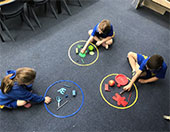
Finally, students worked in small mixed-ability groups to 'be like Packy', collecting objects around the classroom and sorting them into hoops. It was fascinating to see the creative ways they did this. Each group shared one way they had grouped their objects.
The teacher's section at the back of the book has more ideas, including graphing each of Packy's groups and links to literacy.
-
The Art of Clean Upby Ursus Wehrli
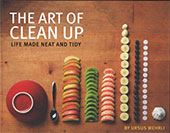
Contributed by Dr Sharyn Livy, Monash University, and Johnson Alagappan, Year 2 teacher, Gilson College
As teachers of mathematics, we're always looking for picture books that engage students through mathematical connections. But how might we engage students with a book that has only pictures and no words?
We recently taught a lesson with Year 1 children at Gilson College using The Art of Clean Up. At first they didn't believe the book had no words! In it, Wehrli takes a photograph, then a second photograph with everything rearranged. Imagine your fruit salad sorted into a picture graph of 15 apple slices and 12 banana slices.
We looked at the photographs together and asked the children what was different each time. Then came the challenge: 'Now it's your turn to tidy up!'
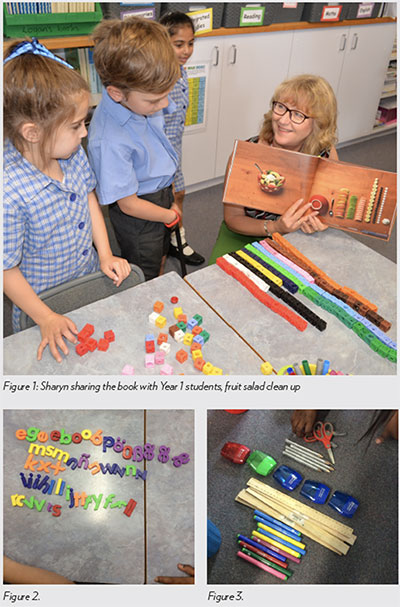
We tipped out tubs of objects we had prepared, and the children worked together to tidy up, with no help needed. If only their parents knew! Many sorted by colour, others by size, or by attributes such as rough and smooth. Bobby and Mia sorted alphabet letters first by colour, then by shape: 'By circley, ones that go like round, ones like an x and ones with straight lines.' Before long, everything in the classroom was being tidied up, including the pencils and rulers.
We really liked this lesson because it connected to reasoning and problem solving: the children had to justify their groupings and consider how many different ways they could tidy up. For more lesson ideas, see Engaging with Mathematics Through Picture Books, also available in the MAV Shop.

These support pages were produced using Strategic Partnership Program funding from the Department of Education and Training.